Sustainable Beauty: 4 US Makeup Brands Leading the Eco-Friendly Movement in 2026
Anúncios
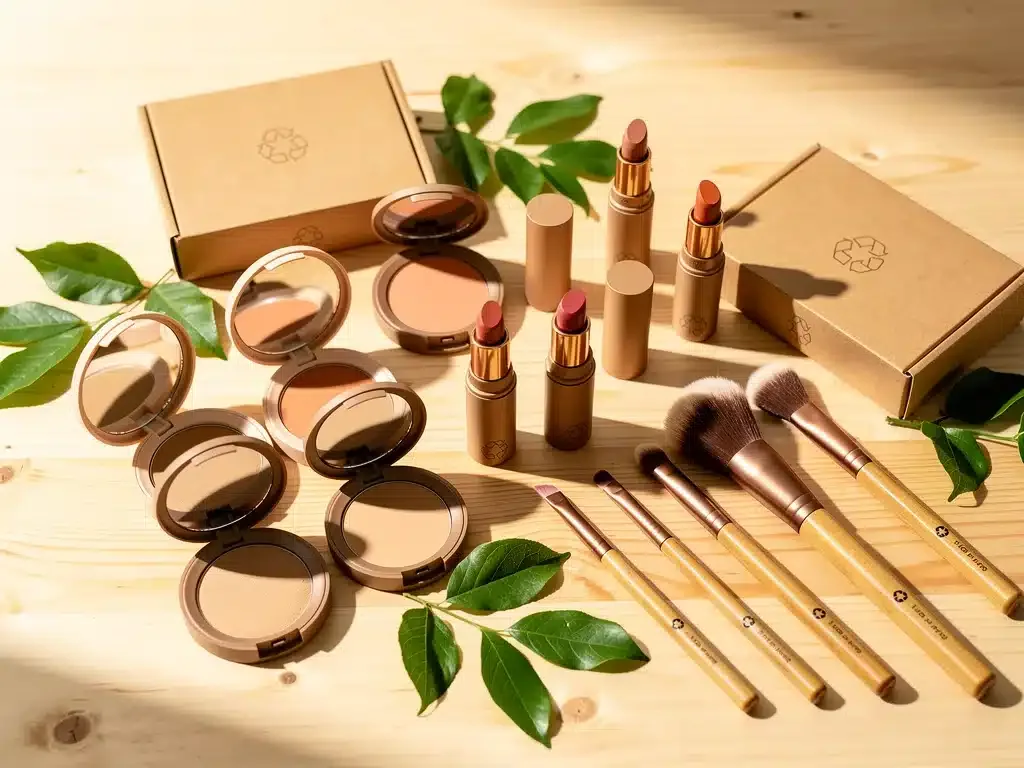
Looking to upgrade your makeup bag without compromising your eco-conscious values? The rise of pioneering Sustainable Beauty Brands in the US has made zero-waste formulas, clean ingredients, and ethical sourcing the new gold standard for everyday glam.
In 2026, conscious cosmetics are no longer a niche trend—they are completely redefining modern cosmetics.
US beauty innovators are eliminating single-use plastics and adopting closed-loop manufacturing, proving that vibrant pigments and planet-first ethics can go hand in hand.
Ready to discover the trailblazers transforming the industry for the better? Here are four standout American labels leading the green cosmetic revolution this year.
The Rise of Eco-Conscious Consumers and Market Demands
The beauty market is witnessing an undeniable surge in demand for eco-conscious products, driven by heightened consumer awareness regarding environmental and social issues.
Anúncios
This shift is compelling brands to re-evaluate their entire value chain, from raw material extraction to product disposal.
Consumers are actively seeking out brands that offer transparency in their ingredient lists, demonstrate ethical sourcing practices, and commit to reducing their carbon footprint. This demand is not just a passing trend but a fundamental change in purchasing behavior.
As a result, companies failing to adapt to these new expectations risk losing market share to those embracing the principles of Sustainable Beauty Brands. The market is rewarding genuine commitment to sustainability.
Shifting Consumer Priorities
Today’s beauty consumer is more informed and discerning than ever before, often prioritizing values over mere aesthetics. They are conducting their own research, scrutinizing product labels, and actively seeking out certifications that validate a brand’s sustainable claims.
This evolving mindset has led to a significant increase in the adoption of products from brands dedicated to environmental protection and social responsibility. The purchasing power of these consumers is a potent force driving industry change.
- Demand for clean, non-toxic ingredients.
- Preference for cruelty-free and vegan formulations.
- Emphasis on recycled and refillable packaging.
- Support for brands with transparent supply chains.
Industry Response to Sustainability Imperatives
In response to these powerful market signals, many legacy beauty companies are investing heavily in research and development to reformulate products and redesign packaging. New brands are also emerging with sustainability as their core mission from inception.
The competitive landscape is pushing for innovation in biodegradable materials, waterless formulations, and energy-efficient manufacturing processes. This collective effort is reshaping the very definition of quality in the beauty sector.
Anúncios
The commitment to sustainable beauty brands is becoming a prerequisite for long-term success and relevance in the modern market. It’s no longer an option but a strategic imperative.
Brand Spotlight: Pioneering Sustainable Practices
One of the leading US makeup brands pioneering the eco-friendly movement in 2026 is known for its innovative approach to ingredient sourcing and waste reduction. Their commitment to sustainability is evident in every aspect of their product lifecycle, from formulation to packaging.
This brand has successfully implemented a closed-loop system for several of its popular product lines, significantly reducing its environmental footprint. They demonstrate that high-performance makeup can coexist with ecological responsibility.
Their efforts have set a high bar for other companies in the industry, inspiring a broader movement towards more responsible manufacturing and consumption practices in Sustainable Beauty: Brands.
Ingredient Innovation and Ethical Sourcing
This brand prioritizes the use of ethically sourced, organic, and wild-harvested ingredients, ensuring that their raw materials are not only effective but also environmentally sound. They work directly with local farmers and communities to support sustainable agriculture.
Their formulations are free from harmful chemicals, parabens, phthalates, and synthetic fragrances, prioritizing consumer health and ecological integrity. This dedication to clean beauty is a cornerstone of their philosophy.
- Utilizes upcycled ingredients from food waste.
- Invests in regenerative agricultural projects.
- Maintains strict standards for ingredient traceability.
- Supports fair trade practices for all suppliers.
Advanced Sustainable Packaging Solutions
Another brand distinguishes itself through groundbreaking work in sustainable packaging, moving away from single-use plastics towards more circular solutions. They have introduced a comprehensive refill program that encourages consumers to reuse their product containers.
Their packaging materials include post-consumer recycled (PCR) plastics, glass, and aluminum, all designed for easy recycling or composting. This focus on the end-of-life cycle of their products is a key differentiator.
This brand’s initiative in packaging innovation is a critical component of their leadership in sustainable beauty brands. It addresses one of the industry’s most pressing environmental challenges head-on.
Reducing Environmental Footprint Through Manufacturing
The manufacturing processes employed by these leading brands are central to their sustainable mission, focusing on minimizing energy consumption, water usage, and waste generation. They implement advanced technologies to ensure their production lines are as eco-efficient as possible.
Many have invested in renewable energy sources for their facilities, significantly lowering their carbon emissions. This commitment to green manufacturing extends to every stage of product creation, illustrating a holistic approach to sustainability.
These efforts are vital in setting a precedent for how beauty products can be produced responsibly, contributing significantly to the goals of Sustainable Beauty Brands.
Energy Efficiency and Renewable Sources
One prominent brand has transitioned its primary manufacturing facility to run entirely on solar and wind energy, dramatically cutting its reliance on fossil fuels. This move not only reduces their environmental impact but also showcases a viable path for industrial sustainability.
They continually audit their energy consumption, implementing improvements in machinery and operational practices to further enhance efficiency. This proactive approach ensures ongoing progress in their sustainability journey.
- Installation of solar panels on factory roofs.
- Partnerships with local renewable energy providers.
- Implementation of energy-saving lighting and equipment.
- Regular energy audits and efficiency upgrades.
Water Conservation and Waste Management
Another innovative brand has developed waterless formulations for a significant portion of its product line, drastically reducing water consumption both in manufacturing and by the end-user. This addresses a critical resource challenge in the beauty industry.
Their waste management programs are equally robust, diverting nearly 90% of manufacturing waste from landfills through recycling and composting initiatives. They also focus on creating biodegradable products that minimize environmental harm after disposal.
These comprehensive strategies underscore their commitment to being a truly sustainable beauty brand, demonstrating leadership in environmental responsibility. The focus on water conservation is particularly impactful.
Innovation in Product Formulation and Lifecycle
The pursuit of sustainability has spurred remarkable innovation in product formulation, with leading brands developing high-performance makeup that is both effective and environmentally benign.
This includes advancements in biodegradable ingredients and multi-functional products that reduce overall consumption.
These brands are investing heavily in green chemistry, exploring novel ways to create pigments and textures without relying on petrochemicals or synthetic fillers. Their research aims to minimize environmental impact throughout the product’s entire lifecycle.
This dedication to innovative and eco-friendly formulations is a cornerstone of the movement towards Sustainable Beauty Brands. It redefines what is possible in clean beauty.
Biodegradable and Non-Toxic Ingredients
One brand excels in creating formulations that are not only non-toxic for human health but also fully biodegradable, ensuring they do not harm aquatic ecosystems or contribute to microplastic pollution. Their ingredient selection is meticulously vetted for environmental safety.
They also focus on using ingredients derived from sustainable agriculture that do not deplete natural resources or harm biodiversity. This responsible approach extends to every component of their products.
- Utilizes plant-based, renewable resources.
- Avoids ingredients linked to deforestation or habitat destruction.
- Ensures all ingredients are free from endocrine disruptors.
- Develops formulas that break down safely in the environment.
Refillable Systems and Circular Economy Models
A key aspect of innovation for these brands is the adoption of refillable packaging and circular economy models. This encourages consumers to purchase a durable primary container and then simply replenish the product, significantly reducing waste.
These systems are designed for convenience and longevity, making sustainable choices easy and appealing for consumers. The focus is on creating products that are part of a continuous cycle, rather than a linear take-make-dispose model.
The push for refillable beauty is a transformative step, positioning these companies as true leaders in the broader discussion around sustainable beauty brands. It’s a direct response to the plastic waste crisis.

Transparency and Ethical Supply Chains
Transparency is a non-negotiable principle for these leading sustainable beauty brands, extending from their ingredient lists to their entire supply chain. They provide detailed information about where their ingredients come from, how they are processed, and the labor conditions involved.
This commitment to ethical sourcing ensures that every product is free from exploitative labor practices, child labor, and unfair wages. Brands are actively working to build long-term, equitable relationships with their suppliers globally.
Such rigorous adherence to ethical standards is a hallmark of the brands leading the charge for Sustainable Beauty Brands. Trust and integrity are paramount.
Auditable Sourcing and Fair Labor Practices
One brand has implemented a robust auditing system for all its suppliers, ensuring compliance with international labor laws and fair trade principles. They conduct regular on-site visits and third-party verifications to uphold these standards.
They also invest in community development projects in their sourcing regions, empowering local populations and fostering economic growth. This holistic approach to ethical sourcing goes beyond mere compliance.
- Conducts regular social and and environmental audits of suppliers.
- Provides fair wages and safe working conditions for all workers.
- Supports local communities through education and infrastructure.
- Eliminates any risk of child or forced labor in the supply chain.
Certifications and Consumer Trust
To further build consumer trust, these brands actively seek and obtain certifications from reputable third-party organizations that validate their sustainable and ethical claims. These certifications serve as external verification of their commitments.
Labels such as USDA Organic, Leaping Bunny (cruelty-free), Ecocert, and B Corp certification provide consumers with assurance that they are making responsible purchasing decisions. This transparency is crucial in a market rife with greenwashing.
These certifications reinforce the credibility of these sustainable beauty brands, helping consumers navigate complex ethical considerations with confidence. It’s a clear signal of genuine commitment.
The Impact on the Broader Beauty Industry
The leadership demonstrated by these four US makeup brands is having a ripple effect across the entire beauty industry, prompting larger corporations to re-evaluate their own sustainability strategies.
Their success proves that eco-friendly practices are not just good for the planet but also good for business.
This competitive pressure is accelerating innovation and encouraging a broader adoption of sustainable manufacturing, packaging, and sourcing methods. The industry is moving towards a more responsible and ethical paradigm.
The influence of these brands is pivotal in shaping the future trajectory of Sustainable Beauty Brands, driving systemic change and raising consumer expectations.
Catalyst for Industry-Wide Change
As these pioneering brands gain market share and recognition, they serve as powerful examples of what is achievable in sustainable beauty. Their innovations often become industry best practices, inspiring competitors to follow suit.
They are actively participating in industry forums and collaborations to share knowledge and promote collective action towards greater sustainability. This collaborative spirit is essential for tackling global environmental challenges.
- Inspiring larger corporations to adopt similar sustainable initiatives.
- Driving technological advancements in green beauty.
- Fostering inter-brand collaboration on sustainability goals.
- Setting new benchmarks for ethical and environmental performance.
Educating and Empowering Consumers
Beyond their products, these brands are also dedicated to educating consumers about the importance of sustainable choices and how to incorporate them into their daily routines. They provide resources and information that empower individuals to make informed decisions.
Through transparent communication and engaging storytelling, they are building a community of conscious consumers who advocate for change. This educational aspect is crucial for sustaining the eco-friendly movement in the long term.
Their efforts in consumer education strengthen the market for sustainable beauty brands, making the demand for responsible products even more robust. This creates a virtuous cycle of awareness and action.
Challenges and Future Outlook for Sustainable Beauty
Despite significant progress, the journey towards a fully sustainable beauty industry is not without its challenges. Brands face hurdles such as the high cost of sustainable materials, complex supply chain logistics, and the need for continuous consumer education.
However, the commitment of leading brands, coupled with advancements in green technology and increasing consumer demand, paints an optimistic picture for the future. Innovation continues to address existing limitations, making sustainability more accessible.
The path forward for Sustainable Beauty Brands involves overcoming these obstacles through persistent innovation and collaboration across the industry.
Overcoming Supply Chain Complexities
Ensuring a fully ethical and sustainable supply chain requires meticulous oversight and significant investment. Brands must navigate global networks, assess environmental impacts at every stage, and guarantee fair labor practices across diverse regions.
Developing alternatives to conventional ingredients and packaging materials often involves R&D costs and scaling challenges. Yet, these brands are continuously seeking innovative solutions and forging strategic partnerships to overcome these hurdles.
- Investing in local and regional sourcing to reduce transportation emissions.
- Developing robust traceability systems for all raw materials.
- Collaborating with NGOs to monitor ethical standards globally.
- Innovating new sustainable materials that are cost-effective at scale.
The Role of Policy and Regulation
Government policies and regulations play a crucial role in accelerating the adoption of sustainable practices across the beauty industry. Stricter environmental standards, incentives for green innovation, and clear labeling requirements can further support the movement.
Advocacy from leading brands for stronger regulatory frameworks is helping to create a more level playing field and preventing greenwashing. This collective push for policy change is vital for widespread industry transformation.
The interplay between pioneering sustainable beauty brands and supportive regulatory environments will define the pace of progress in the coming years. It’s a collaborative effort for a healthier planet.
| Key Aspect | Description of Impact |
|---|---|
| Ingredient Sourcing | Ethical, organic, and regenerative practices minimize environmental harm and support communities. |
| Packaging Innovation | Focus on refillable, recycled, and biodegradable materials to reduce waste and promote circularity. |
| Manufacturing Practices | Emphasis on renewable energy, water conservation, and waste reduction in production processes. |
| Transparency & Ethics | Clear supply chain information, fair labor, and third-party certifications build consumer trust. |
Frequently Asked Questions About Sustainable Beauty
What defines a sustainable beauty brand?▼A sustainable beauty brand is characterized by its commitment to minimizing environmental impact and promoting social responsibility throughout its entire value chain. This includes ethical sourcing, eco-friendly manufacturing, sustainable packaging, and transparent business practices. These brands prioritize the planet and people.
Why is sustainable packaging so important in beauty?▼Sustainable packaging is crucial because traditional beauty packaging significantly contributes to plastic waste and pollution. Eco-friendly alternatives like refillable containers, post-consumer recycled materials, and biodegradable options help reduce landfill waste and lower the industry’s carbon footprint, aligning with the goals of sustainable beauty brands.
How can consumers identify truly sustainable makeup brands?▼Consumers can identify genuinely sustainable brands by looking for third-party certifications (e.g., B Corp, Ecocert, Leaping Bunny), transparent ingredient lists, clear information on sourcing and manufacturing practices, and commitments to waste reduction. Researching a brand’s overall mission and values is also key to finding leading sustainable beauty brands.
What role do ingredients play in sustainable beauty?▼Ingredients are fundamental to sustainable beauty. Brands prioritize ethically sourced, organic, non-toxic, and biodegradable components that do not harm the environment or human health. They often avoid petrochemicals, synthetic fragrances, and ingredients linked to deforestation, ensuring a positive ecological impact from the very start of the product lifecycle.
What is the future outlook for sustainable beauty in the US?▼The future for sustainable beauty in the US is bright, with continued growth expected. Consumer demand, technological advancements, and increasing regulatory pressure will drive more brands to adopt eco-friendly practices. The leadership of key sustainable beauty brands will continue to inspire innovation and systemic change, making sustainable options more mainstream and accessible.
Perspectives
The trajectory set by the Sustainable Beauty Brands signals a profound and lasting shift in the industry. Their innovative approaches to sourcing, manufacturing, and consumer engagement are not just trends but foundational changes.
As these brands continue to push boundaries, they illustrate that environmental stewardship and ethical practices are not merely add-ons but essential components of modern business success.
The broader implications suggest a future where sustainability is integrated into every aspect of product development.
Watching their continued evolution will provide critical insights into how the beauty sector can effectively tackle global challenges like climate change and waste, setting a compelling precedent for other industries to follow.