The 2025 Guide to Exfoliation: AHAs, BHAs, PHAs for Your Skin
Anúncios
The 2025 Guide to Exfoliation: Choosing Between AHAs, BHAs, and PHAs for Your Skin Type unveils the latest in chemical exfoliation. This essential guide helps you navigate the options, ensuring optimal results for your unique complexion. Discover how to achieve a brighter, smoother skin.
The 2025 Guide to Exfoliation: Choosing Between AHAs, BHAs, and PHAs for Your Skin Type
As we step into 2025, the landscape of skincare continues to evolve, with exfoliation remaining a cornerstone for achieving radiant and healthy skin. Understanding the nuances of different chemical exfoliants, specifically AHAs, BHAs, and PHAs, is more critical than ever.
This comprehensive guide delves into the specifics of each type, offering clarity on how to select the best option for your individual skin concerns. Navigating The 2025 Guide to Exfoliation: Choosing Between AHAs, BHAs, and PHAs for Your Skin Type will empower you to make informed decisions.
Understanding the Core of Chemical Exfoliation in 2025
Chemical exfoliation has revolutionized how we approach skin renewal, moving beyond harsh physical scrubs to more sophisticated methods. These acids work by dissolving the bonds between dead skin cells, promoting their shedding and revealing fresher skin underneath.
The efficacy and suitability of these exfoliants, however, depend heavily on your skin type and specific concerns. This section lays the groundwork for understanding the fundamental differences as outlined in The 2025 Guide to Exfoliation: Choosing Between AHAs, BHAs, and PHAs for Your Skin Type.
Knowing which acid to choose can significantly impact your skincare journey, preventing irritation while maximizing benefits. It is about precision and personalized care.
The Science Behind AHAs: Alpha Hydroxy Acids
Alpha Hydroxy Acids (AHAs) are water-soluble acids derived from sugary fruits. They work primarily on the skin’s surface, making them excellent for addressing concerns like uneven skin tone, fine lines, and mild hyperpigmentation.
Common AHAs include glycolic acid, lactic acid, and mandelic acid, each with unique molecular sizes that influence their penetration depth. This makes them a versatile component in The 2025 Guide to Exfoliation: Choosing Between AHAs, BHAs, and PHAs for Your Skin Type for many.
BHAs: Beta Hydroxy Acids and Their Unique Properties
Beta Hydroxy Acids (BHAs), most notably salicylic acid, are oil-soluble. This unique characteristic allows them to penetrate deeper into the pores, making them ideal for oily, acne-prone, and congested skin types.
BHAs can dissolve sebum and dead skin cells within the follicle, effectively clearing blackheads and whiteheads. Their anti-inflammatory properties also make them beneficial for reducing redness associated with breakouts, an important consideration in The 2025 Guide to Exfoliation: Choosing Between AHAs, BHAs, and PHAs for Your Skin Type.
PHAs: The Gentle Giants of Exfoliation in The 2025 Guide to Exfoliation: Choosing Between AHAs, BHAs, and PHAs for Your Skin Type
Poly Hydroxy Acids (PHAs) are the newest generation of chemical exfoliants, gaining significant traction for their gentle yet effective action. They have larger molecular structures compared to AHAs and BHAs, meaning they penetrate the skin more slowly and superficially.
This gentle approach makes PHAs perfect for sensitive skin, including those prone to redness or rosacea. They offer exfoliation benefits with minimal irritation, a key highlight in The 2025 Guide to Exfoliation: Choosing Between AHAs, BHAs, and PHAs for Your Skin Type.
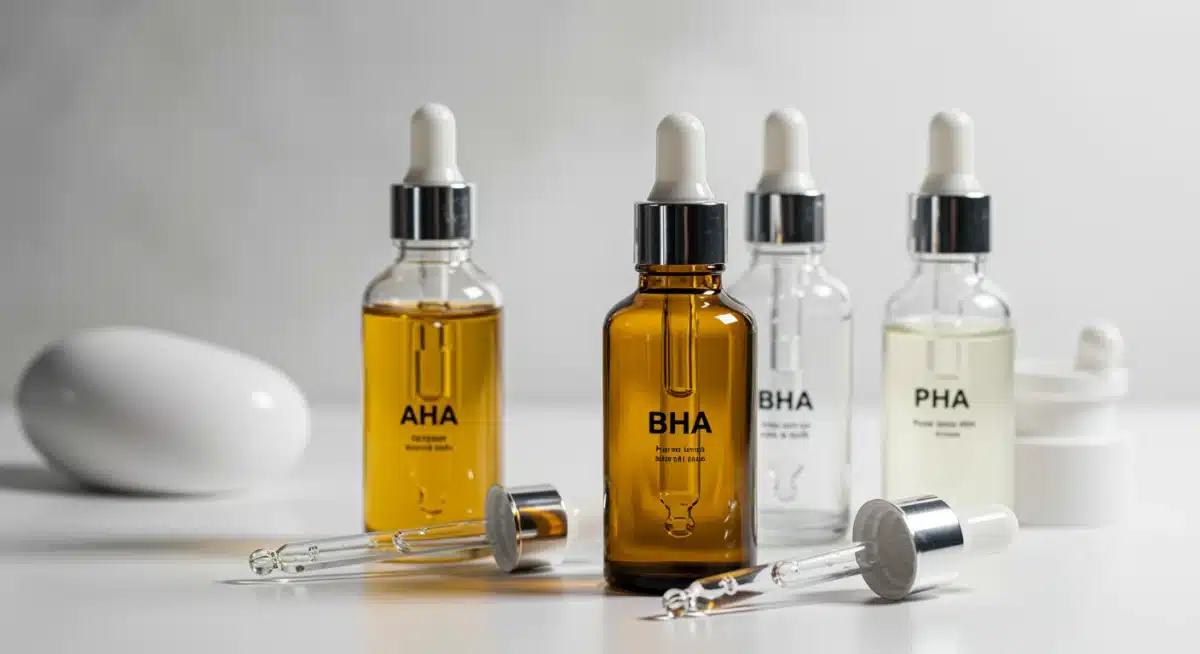
The Benefits of Incorporating PHAs into Your Routine
Beyond gentle exfoliation, PHAs also possess humectant properties, attracting and retaining moisture in the skin. This dual action helps to strengthen the skin barrier while improving texture and tone without causing dryness.
Ingredients like gluconolactone and lactobionic acid are common PHAs, offering antioxidant benefits that protect the skin from environmental damage. Their multifaceted benefits are why they are increasingly featured in The 2025 Guide to Exfoliation: Choosing Between AHAs, BHAs, and PHAs for Your Skin Type.
- Gentle Exfoliation: Ideal for sensitive and reactive skin types.
- Hydration Boost: Acts as a humectant, drawing moisture into the skin.
- Antioxidant Protection: Helps combat free radical damage.
- Barrier Support: Strengthens the skin’s natural protective barrier.
Matching Exfoliants to Your Skin Type: A 2025 Perspective
The cornerstone of effective exfoliation lies in understanding your skin’s unique needs. What works wonders for one person might cause irritation for another. This section provides a tailored approach to selecting the right exfoliant based on common skin types, central to The 2025 Guide to Exfoliation: Choosing Between AHAs, BHAs, and PHAs for Your Skin Type.
Personalized skincare is not just a trend; it’s a necessity for optimal results. Consider your skin’s tendencies before committing to any exfoliant.
For those interested in further reading on skincare advancements, explore reputable sources like the American Academy of Dermatology for expert insights.
Dry and Sensitive Skin: Prioritizing Gentleness
For dry and sensitive skin types, gentleness is paramount. PHAs are often the top recommendation due to their larger molecular size and hydrating properties. They provide effective exfoliation without stripping the skin of its natural moisture.
Mandelic acid, an AHA with a larger molecular structure, can also be a suitable option for sensitive skin, offering a milder exfoliation than glycolic acid. This careful selection is crucial in The 2025 Guide to Exfoliation: Choosing Between AHAs, BHAs, and PHAs for Your Skin Type.
Oily and Acne-Prone Skin: Targeting Congestion
Oily and acne-prone skin types benefit immensely from BHAs, particularly salicylic acid. Its oil-soluble nature allows it to penetrate deep into pores, dissolving sebum and preventing breakouts. This makes it an indispensable tool for managing congestion.
Glycolic acid, an AHA, can also be beneficial for improving skin texture and reducing post-inflammatory hyperpigmentation often associated with acne. Balancing these options is key in The 2025 Guide to Exfoliation: Choosing Between AHAs, BHAs, and PHAs for Your Skin Type.
Combination and Normal Skin: Balancing Act
Individuals with combination or normal skin types have more flexibility in choosing exfoliants. They can often tolerate a wider range of acids or benefit from alternating between different types. AHAs can address surface concerns like texture and brightness.
BHAs can target oilier areas, such as the T-zone, to prevent congestion. A balanced approach, perhaps using different acids on different days or in different areas, is often effective. This adaptability is a core principle in The 2025 Guide to Exfoliation: Choosing Between AHAs, BHAs, and PHAs for Your Skin Type.

Advanced Exfoliation Techniques for 2025
Beyond single-acid formulations, 2025 sees an increased emphasis on multi-acid blends and targeted treatments. These products combine different exfoliants in carefully formulated ratios to deliver comprehensive benefits without overwhelming the skin.
Layering different acids, when done correctly and cautiously, can also be an effective strategy for experienced users. Always introduce new products slowly and observe your skin’s reaction. For more on advanced techniques, consider exploring FriendlyDrama’s skincare routines section.
Integrating Exfoliants into Your Skincare Routine
Proper integration of exfoliants is crucial to prevent over-exfoliation and maximize benefits. Frequency, concentration, and complementary products all play a significant role. This is a vital aspect of The 2025 Guide to Exfoliation: Choosing Between AHAs, BHAs, and PHAs for Your Skin Type.
Start with lower concentrations and gradually increase as your skin builds tolerance. Always follow exfoliation with hydrating and soothing ingredients to support the skin barrier.
Sun protection is non-negotiable when using chemical exfoliants, as they can increase sun sensitivity. A broad-spectrum SPF 30 or higher should be applied daily, without fail, to protect your newly revealed skin.
Frequency and Concentration Guidelines
For beginners, starting with exfoliation 1-2 times a week is recommended, especially with potent AHAs like glycolic acid or BHAs like salicylic acid. Sensitive skin types should opt for even less frequent use, perhaps weekly or bi-weekly with PHAs.
As your skin adapts, you might increase frequency to 2-3 times a week, but rarely daily unless specified by a dermatologist. Higher concentrations should also be introduced cautiously. This measured approach is key in The 2025 Guide to Exfoliation: Choosing Between AHAs, BHAs, and PHAs for Your Skin Type.
Addressing Common Exfoliation Concerns in 2025
Despite their benefits, chemical exfoliants can sometimes lead to concerns like irritation, redness, or dryness if not used correctly. Understanding how to mitigate these issues is as important as choosing the right product. The 2025 Guide to Exfoliation: Choosing Between AHAs, BHAs, and PHAs for Your Skin Type also covers troubleshooting.
Always patch test new products and listen to your skin. If excessive redness, stinging, or peeling occurs, reduce frequency or discontinue use.
Signs of Over-Exfoliation and How to Recover
Over-exfoliation can manifest as tight, shiny, red, or excessively dry skin, sometimes accompanied by increased sensitivity or breakouts. If you notice these signs, immediately pause all active exfoliants.
Focus on barrier-repairing ingredients like ceramides, hyaluronic acid, and fatty acids. Keep your routine simple and hydrating until your skin recovers its balance. Patience is key in the recovery process, a crucial lesson from The 2025 Guide to Exfoliation: Choosing Between AHAs, BHAs, and PHAs for Your Skin Type.
| Category | Description | Observation |
|---|---|---|
| AHAs | Water-soluble, surface exfoliation. | Best for fine lines, uneven tone. |
| BHAs | Oil-soluble, deep pore penetration. | Ideal for acne, oily skin. |
| PHAs | Large molecules, gentle action. | Suitable for sensitive, dry skin. |
Frequently Asked Questions: The 2025 Guide to Exfoliation
The 2025 Guide to Exfoliation is a comprehensive resource detailing the selection and application of Alpha Hydroxy Acids (AHAs), Beta Hydroxy Acids (BHAs), and Poly Hydroxy Acids (PHAs) for various skin types.
It is used to help individuals understand which chemical exfoliant is best suited for their specific skin concerns, such as acne, sensitivity, dryness, or signs of aging, promoting healthier and more radiant skin.
The benefits include clearer pores, improved skin texture, reduced fine lines, brighter complexion, and better management of specific skin conditions like acne or sensitivity, all through informed exfoliant choices.
Anyone looking to improve their skin’s health and appearance through chemical exfoliation can use this guide, particularly those seeking tailored advice based on their unique skin type and concerns.
Apply the guide by identifying your skin type, researching recommended exfoliants (AHAs, BHAs, or PHAs), and integrating them into your routine slowly, always prioritizing sun protection and skin barrier health.
Looking Ahead: The Future of Exfoliation
The landscape of skincare is constantly evolving, and exfoliation is no exception. As we look beyond 2025, expect to see further innovations in exfoliant formulations, including more targeted delivery systems and an increased focus on microbiome-friendly ingredients. The emphasis on personalized routines will only grow, with AI-driven diagnostics potentially playing a larger role in recommending the perfect exfoliant for each individual. Staying informed through resources like The 2025 Guide to Exfoliation: Choosing Between AHAs, BHAs, and PHAs for Your Skin Type will be key to navigating these exciting developments and maintaining optimal skin health.