Smart Watches & Wearable Tech Accessories in 2026: Integrating Style and Function Seamlessly
Anúncios
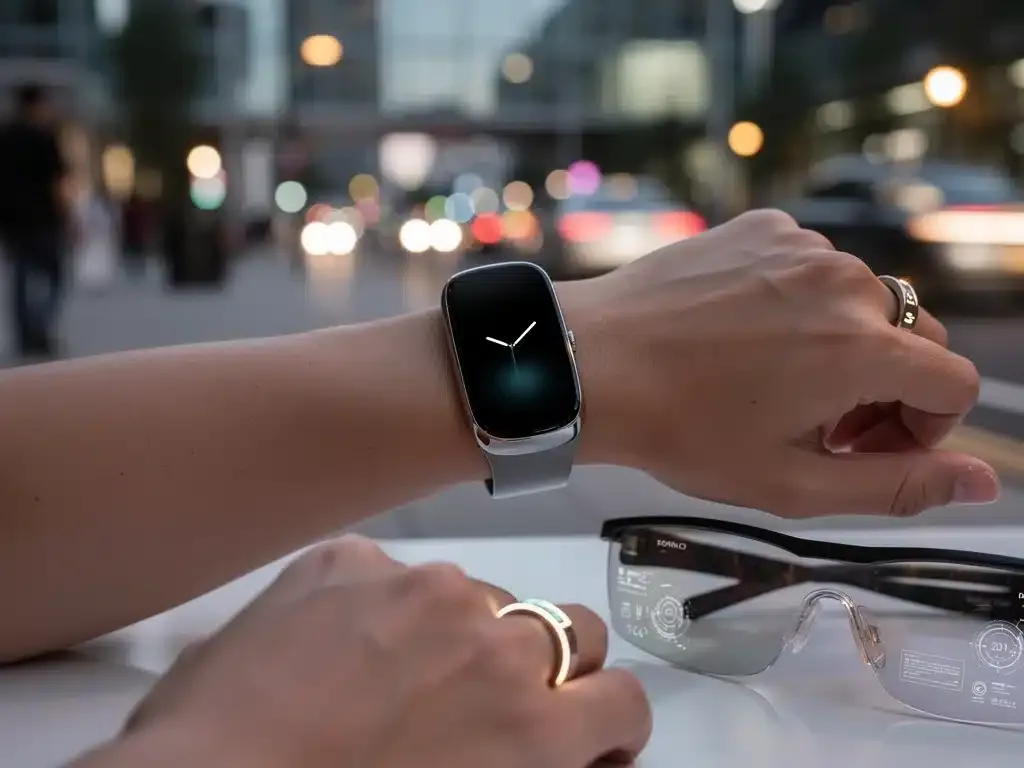
Modern Smart Watches & Wearable Tech have officially crossed the threshold from functional gadgets to quintessential fashion statements. Today’s wristwear proves you no longer have to compromise sleek, personal style to access cutting-edge digital performance.
Designers are continuously merging luxury materials with advanced biometric tracking to deliver versatile connected accessories. From ceramic finishes to customizable interfaces, these intelligent devices adapt effortlessly to both boardroom meetings and evening events.
Choosing the ideal digital timepiece means finding the sweet spot between health monitoring and aesthetic appeal. Here is how the latest collection of high-tech wearables is redefining everyday elegance without missing a beat.
The Evolution of Smart Watches: Beyond Timekeeping
Smart watches have transcended their initial role as simple notification hubs, evolving into sophisticated health monitors, communication devices, and personal assistants.
By 2026, these devices are projected to offer an even more comprehensive suite of features, pushing the boundaries of what’s possible on the wrist.
Anúncios
The focus is shifting towards proactive health management, advanced biometric tracking, and seamless integration with smart home ecosystems. This evolution underscores a broader trend where technology becomes an invisible, yet indispensable, part of daily life.
Manufacturers are investing heavily in R&D to miniaturize components and enhance battery life, addressing two of the most significant challenges in wearable technology. The result will be thinner, lighter, and more powerful devices that redefine user expectations.
Advanced Health and Wellness Monitoring
The next generation of smart watches will feature an array of enhanced health sensors, moving beyond heart rate and step counting. Expect continuous glucose monitoring, advanced sleep stage analysis, and even early detection capabilities for various health conditions, all integrated into stylish designs.
These innovations are poised to revolutionize personal health management, offering users unprecedented insights into their well-being. Data privacy and security will become paramount, with robust encryption and user control over sensitive health information.
The goal is to empower users with actionable data, enabling them to make informed decisions about their lifestyle and seek medical attention proactively when necessary.
- Continuous glucose monitoring for diabetes management
- Advanced sleep stage tracking with personalized recommendations
- Early detection of cardiac anomalies and stress levels
- Integration with telehealth services for remote consultations
Seamless Connectivity and Ecosystem Integration
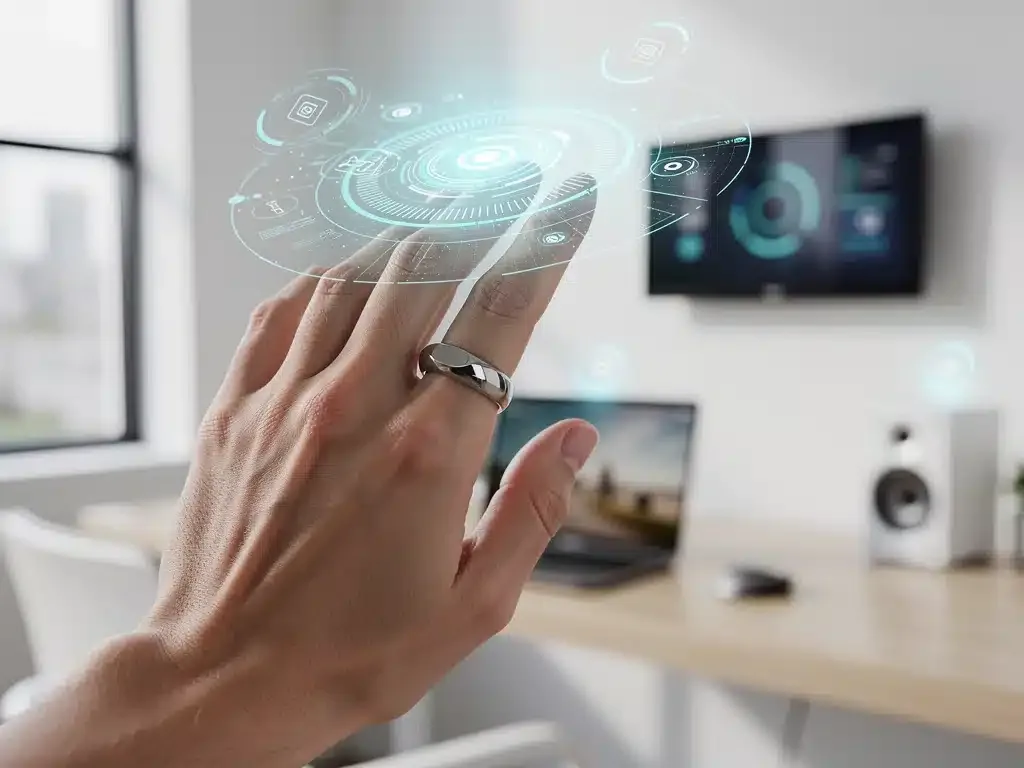
Smart watches in 2026 will serve as central hubs for a multitude of connected devices, offering seamless control over smart home appliances, vehicles, and other personal electronics. The era of fragmented connectivity is rapidly drawing to a close.
Expect enhanced cellular capabilities, allowing for truly standalone operation without a paired smartphone for many tasks. This independence will further solidify the smart watch’s position as a primary personal computing device.
Anúncios
The interoperability between different brands and platforms will improve, driven by industry-wide standards and open APIs, creating a more cohesive and user-friendly experience across the entire tech ecosystem.
Wearable Tech Accessories: Redefining Personal Style
The concept of wearable tech extends far beyond smart watches, encompassing a diverse range of accessories that blend cutting-edge functionality with high fashion.
Rings, glasses, and even smart fabrics are becoming increasingly sophisticated, offering discreet yet powerful technological enhancements.
These accessories are designed to complement, rather than dominate, a user’s aesthetic, making technology an integral part of their personal expression. The market is witnessing a surge in designer collaborations, bringing high-fashion sensibilities to the tech world.
The emphasis is on intuitive interaction and unobtrusive design, ensuring that the technology enhances daily life without being a constant distraction. The line between traditional jewelry and smart tech is blurring.
Smart rings, for instance, are evolving from simple payment devices to sophisticated biometric sensors and gesture controllers. Their compact form factor makes them ideal for discreet notifications and interactions, appealing to users who prefer minimalism.
Augmented Reality (AR) glasses are also poised for a significant breakthrough, offering immersive experiences without obstructing the user’s field of vision. These devices will integrate seamlessly with daily activities, from navigation to information overlay.
The design philosophy behind these accessories emphasizes personalization, with customizable materials, finishes, and modular components allowing users to tailor devices to their unique preferences. This shift underscores the growing importance of style in the adoption of new technologies.
The Rise of Smart Jewelry and Fashion
Jewelry is undergoing a technological renaissance, with smart rings, necklaces, and bracelets offering discreet notifications, health tracking, and even personal safety features. These items are designed to be indistinguishable from traditional high-end accessories.
Fashion brands are increasingly collaborating with tech companies to embed smart functionalities directly into clothing and accessories. Expect garments that monitor vital signs, adjust to environmental conditions, or even offer haptic feedback for navigation.
This convergence of fashion and technology creates new avenues for personal expression and practical utility, blurring the boundaries between aesthetics and functionality. The future of fashion is undoubtedly smart.
- Smart rings for contactless payments and health monitoring
- Necklaces with discreet emergency alerts and activity trackers
- Apparel with integrated sensors for performance tracking and climate control
Augmented Reality Glasses: A New Vision for Interaction
AR glasses are moving beyond niche applications to become a mainstream wearable, offering a hands-free interface to digital information. By 2026, these devices will be lighter, more stylish, and boast significantly improved battery life.
Their applications will span from enhanced navigation and real-time language translation to interactive entertainment and professional assistance. The goal is to provide contextual information seamlessly integrated into the user’s perception of the real world.
Privacy concerns surrounding AR glasses are being addressed through advanced eye-tracking and contextual awareness features, ensuring that data collection is always transparent and user-controlled. The potential for these devices to transform daily interactions is immense.
Integrating Style and Function Seamlessly: The Design Imperative
The aesthetic appeal of smart watches and wearable tech is no longer an afterthought but a primary design consideration. Consumers expect devices that are both powerful and beautiful, reflecting their personal style and status.
Manufacturers are employing premium materials, innovative finishes, and ergonomic designs to create wearables that feel as good as they look. Customization options, from interchangeable straps to personalized engravings, are becoming standard offerings.
This focus on design ensures that technology enhances, rather than detracts from, the user’s overall appearance. The seamless integration of style and function is now the benchmark for success in the wearable market.
Personalization and Customization Options
The ability to personalize smart watches and wearable tech is a major driver of consumer adoption. Users want devices that reflect their unique personality and preferences, moving away from generic, one-size-fits-all solutions.
Expect an even broader array of customization options by 2026, including modular components, bespoke materials, and AI-driven design suggestions. This trend empowers users to create truly unique technological companions.
From watch faces that adapt to your outfit to smart rings that match your jewelry collection, personalization will be key to making wearables feel truly personal. This level of customization ensures that Smart Watches & Wearable Tech are not just gadgets, but extensions of self.
Ergonomics and Comfort: The Unseen Innovation
Beyond aesthetics, the comfort and wearability of smart devices are critical for sustained adoption. Devices must feel natural and unobtrusive, even during prolonged use, to truly integrate into daily life.
Innovations in flexible displays, lightweight materials, and advanced sensor placement are making wearables more comfortable than ever. The goal is to make the technology disappear, leaving only the benefits.
Ergonomic design is paramount, ensuring that devices fit a wide range of body types and remain comfortable during various activities, from intense workouts to extended work sessions. The user experience depends heavily on this often-overlooked aspect.
The Market Landscape: Key Players and Emerging Trends
The competitive landscape for smart watches and wearable tech is dynamic, with established tech giants vying for market share alongside innovative startups. This competition is fueling rapid advancements and pushing the boundaries of what’s possible.
Apple, Samsung, and Google continue to dominate, but new entrants are bringing fresh perspectives and specialized solutions to the market. The focus is on niche applications and unique user experiences that cater to specific demographics.
Emerging trends include greater emphasis on sustainability in manufacturing, ethical data practices, and the development of open platforms that foster collaboration and innovation across the industry. The market for Smart Watches & Wearable Tech is set to expand significantly.
Industry Leaders and Innovators
Apple continues to set benchmarks with its ecosystem integration and health features, while Samsung offers strong competition with diverse device options. Google’s renewed focus on Wear OS is expected to bring significant advancements in software and AI capabilities.
Beyond the tech giants, companies like Oura with their smart rings and Whoop with their fitness trackers are carving out significant niches. These innovators often specialize in specific aspects of wearable tech, pushing the envelope in areas like sleep tracking or recovery.
The fragmentation of the market also fosters innovation, as smaller players can experiment with radical designs and functionalities that larger corporations might deem too risky. This diverse ecosystem benefits consumers with a wider array of choices.
- Apple: Ecosystem integration, health features, design leadership
- Samsung: Diverse device portfolio, strong Android integration
- Google: Wear OS advancements, AI-driven functionalities
- Oura/Whoop: Specialized health and fitness tracking solutions
User Experience: Intuition and Intelligence
The ultimate success of smart watches and wearable tech hinges on their ability to provide an intuitive and intelligent user experience. Devices must anticipate user needs, offer personalized insights, and simplify daily tasks rather than complicate them.
Artificial intelligence and machine learning are playing increasingly crucial roles in enhancing user interaction, enabling more natural voice commands, predictive analytics, and adaptive interfaces. The goal is to create a symbiotic relationship between user and device.
Contextual awareness, where devices understand the user’s environment and activities, will lead to more relevant notifications and proactive assistance. This shift from reactive to proactive technology is a hallmark of the next generation of wearables.
AI and Machine Learning in Wearables
AI algorithms are transforming raw sensor data into actionable insights, providing users with personalized recommendations for health, fitness, and productivity. Expect more sophisticated pattern recognition and predictive capabilities.
Machine learning models will enable smart watches to adapt to individual user habits, optimizing battery life, notification preferences, and even workout routines. This level of personalization makes devices truly feel like personal companions.
Natural language processing will improve, making voice assistants on wearables more capable and conversational, further streamlining interactions and reducing the need for screen-based input. This makes Smart Watches & Wearable Tech more accessible.
Privacy and Data Security: A Growing Concern
As wearables collect increasingly sensitive personal data, privacy and security become paramount. Consumers are demanding greater transparency and control over their information, and manufacturers are responding with robust safeguards.
End-to-end encryption, on-device processing of sensitive data, and clear data governance policies are becoming standard features. Regulatory bodies are also playing a crucial role in shaping how personal data is collected and used.
Building trust through transparent practices and strong security measures is essential for the continued growth and adoption of wearable technology. Users must feel confident that their personal data is protected.
The Future Outlook: Beyond 2026
Looking beyond 2026, the trajectory for smart watches and wearable tech points towards even deeper integration with the human body and environment. Anticipate advancements in bio-integrated sensors, neural interfaces, and energy harvesting technologies.
The concept of “invisible tech” will gain prominence, where devices seamlessly blend into our lives to the point of being unnoticeable, yet profoundly impactful. This future promises a world where technology augments human capabilities in unprecedented ways.
Ethical considerations surrounding human augmentation, data ownership, and digital well-being will become central to the development and deployment of these advanced wearables. The discussion around Smart Watches & Wearable Tech will continue to evolve.
Bio-Integrated Sensors and Neural Interfaces
The next frontier involves bio-integrated sensors that can monitor physiological markers with extreme precision, offering real-time insights into metabolic processes and cognitive states. These could revolutionize personalized medicine and performance optimization.
Early forms of neural interfaces, allowing for thought-controlled interactions with devices, are also on the horizon. While still in nascent stages, this technology promises a paradigm shift in human-computer interaction, making wearables truly intuitive.
These advancements will require rigorous ethical frameworks and extensive testing to ensure safety and responsible implementation. The potential benefits for health, accessibility, and human potential are immense.
Sustainability and Ethical Manufacturing
The environmental impact of manufacturing and disposing of electronic devices is a growing concern. The wearable tech industry is increasingly focusing on sustainable materials, modular designs for easier repairs, and responsible recycling programs.
Consumers are becoming more conscious of the ecological footprint of their purchases, driving demand for ethically sourced and environmentally friendly products. This pressure is encouraging manufacturers to innovate in sustainable practices.
Transparency in supply chains and fair labor practices are also becoming key considerations for brands looking to build trust and appeal to socially conscious consumers. The future of Smart Watches & Wearable Tech must be sustainable.
Impact on Daily Life and Society
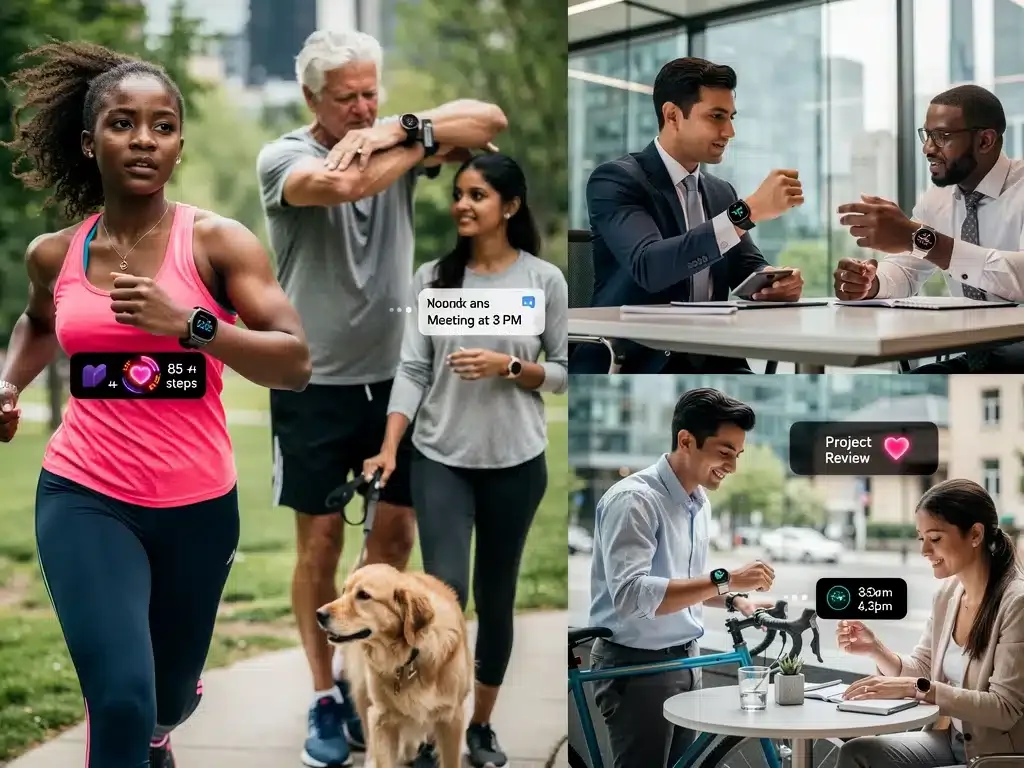
The widespread adoption of smart watches and wearable tech is profoundly impacting various aspects of daily life, from personal health and fitness to professional productivity and social interaction. These devices are reshaping how we interact with information and each other.
In healthcare, wearables are enabling remote patient monitoring and preventative care on an unprecedented scale, potentially reducing healthcare costs and improving outcomes. In the workplace, they are enhancing efficiency and communication, particularly in hands-on professions.
However, concerns regarding digital addiction, data overload, and the blurring lines between work and personal life also warrant careful consideration. The full societal impact of Smart Watches & Wearable Tech is still unfolding.
Transforming Health and Fitness Routines
Wearables have democratized health and fitness, making advanced tracking and personalized coaching accessible to millions. By 2026, this will be further enhanced by more precise biometric data and AI-driven insights.
The integration of wearables with fitness apps, virtual reality workouts, and personalized nutrition plans will create a holistic approach to wellness. This empowers individuals to take greater control over their physical and mental health.
The shift towards preventative health, driven by continuous monitoring and early detection capabilities, has the potential to significantly improve public health outcomes globally. This makes Smart Watches & Wearable Tech invaluable.
Enhancing Productivity and Communication
For professionals, smart watches and wearable tech offer discreet ways to manage notifications, respond to messages, and access critical information without interrupting workflow. This boosts productivity and keeps individuals connected on the go.
In industries like manufacturing, logistics, and healthcare, AR glasses and smart sensors are providing workers with real-time data, hands-free instructions, and enhanced safety features. This integration streamlines operations and reduces errors.
The ability to communicate efficiently and access information instantly, regardless of location, is transforming the modern workplace. The seamless integration of Smart Watches & Wearable Tech is a game-changer for professional environments.
| Key Aspect | Future Outlook 2026 |
|---|---|
| Health Monitoring | Advanced biometric sensors for proactive health management, including continuous glucose and early disease detection. |
| Design & Style | Premium materials, personalized customization, and ergonomic designs making wearables indistinguishable from high-fashion accessories. |
| Connectivity | Seamless ecosystem integration, enhanced cellular independence, and improved interoperability across platforms. |
| User Experience | AI-driven intelligence, predictive analytics, natural language processing, and contextual awareness for intuitive interaction. |
Frequently Asked Questions About Wearable Tech in 2026
What new health monitoring features can be expected in 2026 smart watches?▼By 2026, smart watches are projected to include continuous glucose monitoring, more sophisticated sleep stage analysis, and early detection capabilities for various health conditions. These advancements aim to offer proactive health insights and empower users with detailed wellness data.
How will style and design evolve for wearable tech accessories?▼Design for wearable tech will emphasize premium materials, personalization, and ergonomic comfort. Accessories like smart rings and AR glasses will seamlessly integrate into fashion, offering customizable aesthetics to match individual styles while maintaining high functionality and discretion.
Will smart watches be able to operate independently without a smartphone by 2026?▼Yes, enhanced cellular capabilities are expected to allow many smart watches to operate more independently from smartphones. This means users can perform tasks like making calls, streaming music, and accessing apps directly from their wrist, increasing device autonomy.
What role will AI play in the user experience of future wearable tech?▼AI and machine learning will be crucial for an intuitive user experience, enabling predictive analytics, personalized insights, and more natural voice interactions. Wearables will adapt to user habits and environmental context, offering proactive assistance and smarter notifications.
Are there growing concerns about privacy and data security with advanced wearables?▼Yes, as wearables collect more sensitive data, privacy and security are paramount concerns. Manufacturers are implementing robust encryption, on-device processing, and transparent data policies. Regulatory bodies are also working to ensure user control and protection of personal information.
Perspectives
The evolution of Smart Watches & Wearable Tech signifies a pivotal shift in personal technology. The continued convergence of fashion, health, and connectivity will redefine how we interact with the digital world.
Monitoring advancements in AI, bio-integration, and ethical manufacturing will be crucial, as these elements will shape not just the devices themselves, but their profound impact on our daily lives and societal norms. The future promises an era where technology is not merely worn, but truly lived.