FCC Mandate: Blocking AI Robocalls with Caller ID Authentication
Anúncios
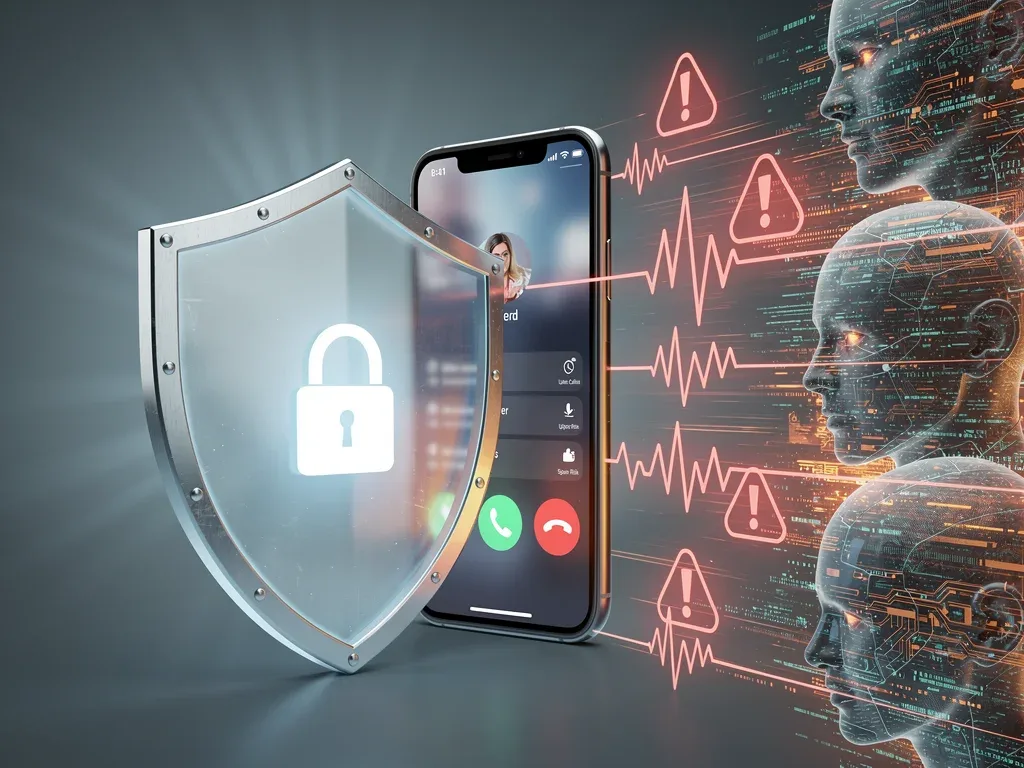
Tired of answering a local number only to hear a synthetic voice pitching a fake warranty or bank alert? The FCC’s 100% Caller ID Authentication Mandate is now fully active across the United States, aggressively blocking AI Robocalls before they ever reach your phone.
By forcing every voice service provider to verify call origins through strict cryptographic protocols, federal regulators are dismantling the spoofing tactics behind automated phone scams. Fraudsters can no longer disguise overseas bot networks as trusted neighbors, government agencies, or financial institutions.
Whether you rely on your smartphone for family emergencies or daily business, this telecommunications crackdown promises a quieter, safer calling experience. Here are the key enforcement rules, carrier obligations, and consumer protections you need to monitor next.
The Urgency Behind the FCC Caller ID Authentication Mandate
The proliferation of robocalls, particularly those leveraging advanced AI, has reached epidemic proportions, posing significant financial and privacy risks to consumers nationwide. These calls often employ sophisticated spoofing techniques, making them appear legitimate and difficult to trace. The urgency for robust action has never been clearer.
Millions of Americans receive unwanted robocalls daily, ranging from nuisance telemarketing to outright fraudulent schemes that cost victims billions annually. The ability of AI to generate convincing human-like voices and adapt scripts in real-time has further exacerbated the problem, making detection and avoidance more challenging for the average person.
Anúncios
In response to this escalating threat, the FCC recognized the critical need for a universal, enforceable standard. The FCC Caller ID Authentication Mandate was developed as a direct answer to this crisis, aiming to cut off the primary vector for these deceptive communications at their source, thereby protecting vulnerable populations and restoring faith in telecommunications.
Understanding the STIR/SHAKEN Framework
At the heart of the FCC's mandate is the widespread adoption and implementation of the STIR/SHAKEN framework. This technological standard is designed to verify the authenticity of caller ID information, ensuring that the number displayed on your phone is truly the one making the call.
STIR (Secure Telephone Identity Revisited) and SHAKEN (Signature-based Handling of Asserted information using toKENs) work in tandem to cryptographically sign and verify calls as they pass through the network. This digital signature acts like a tamper-proof seal, allowing receiving carriers to confirm the origin of a call and its legitimacy before it reaches the consumer.
The framework assigns different levels of attestation to calls—Full, Partial, or Gateway—depending on the carrier's knowledge of the caller. This hierarchical system helps to identify and flag calls from unknown or suspicious sources, significantly enhancing the effectiveness of the FCC Caller ID Authentication efforts.
How STIR/SHAKEN Authenticates Calls
Call Originator Signing: The originating service provider digitally signs calls with a unique certificate, confirming the calling number's authenticity.
Verification by Receiving Carrier: The terminating service provider verifies this digital signature against a trusted database, ensuring the call hasn't been spoofed.
Attestation Levels: Calls receive an attestation level (A, B, or C) indicating the certainty of the caller's identity, which helps in filtering.
The successful implementation of STIR/SHAKEN is foundational to the FCC's strategy. Without this robust technical backbone, the mandate to block AI-generated robocalls would lack the necessary tools to be truly effective. It represents a collaborative industry-wide effort to secure the voice network.
Impact on Voice Service Providers and Compliance
The FCC Caller ID Authentication Mandate places significant responsibilities on voice service providers, requiring them to invest in and deploy the necessary technology to comply. This includes both large Tier 1 carriers and smaller, rural providers, ensuring a comprehensive network-wide defense against robocalls.
Initially, larger carriers were mandated to implement STIR/SHAKEN by June 2021, with smaller providers receiving extensions to ensure they had adequate time and resources. The full 100% implementation now means that all providers, regardless of size, must actively authenticate calls passing through their networks.
Anúncios
Non-compliance can result in significant penalties, including fines and potential restrictions on network access, underscoring the FCC's serious commitment to enforcement. This regulatory pressure ensures that providers prioritize the security and integrity of their services, ultimately benefiting consumers.
Challenges and Solutions for Providers
Technological Upgrades: Carriers must integrate STIR/SHAKEN into their existing infrastructure, often requiring substantial software and hardware investments.
Interoperability Issues: Ensuring seamless authentication across different networks and providers requires ongoing collaboration and standardization.
Rural Provider Support: The FCC has provided resources and extensions to smaller carriers to help them meet the mandate without undue financial burden.
The compliance journey for voice service providers has been complex, but the overarching goal of enhancing call security remains paramount. The ongoing efforts ensure that the FCC Caller ID Authentication Mandate achieves its intended broad impact against AI-generated robocalls.
How AI-Generated Robocalls Exacerbate the Problem
The advent of artificial intelligence has dramatically amplified the capabilities of robocallers, making them more deceptive and harder to detect. AI can generate highly convincing human-like voices, mimic accents, and even adapt conversation flows in real-time, blurring the lines between a legitimate call and a sophisticated scam.
These AI-powered robocalls can personalize messages based on publicly available data, increasing their success rate in tricking unsuspecting individuals into divulging personal information or falling for fraudulent schemes. The sheer volume and sophistication of these calls overwhelm traditional defense mechanisms.
The FCC Caller ID Authentication Mandate directly addresses this heightened threat by making it significantly more difficult for these AI-generated calls to spoof caller IDs. By verifying the origin of calls, the mandate reduces the anonymity that AI-driven robocallers rely upon to execute their deceptive tactics effectively.
Consumer Protection and the Future of Trust in Calling
The primary beneficiary of the FCC Caller ID Authentication Mandate is the consumer. By significantly reducing the number of fraudulent and unwanted robocalls, the mandate aims to restore a sense of trust and security to the telephone network. This protection extends beyond mere annoyance to safeguarding personal finances and sensitive information.
Consumers can expect to see fewer calls from spoofed numbers, making it easier to identify legitimate callers and filter out malicious ones. This enhanced trust is crucial for essential services like healthcare providers, financial institutions, and emergency services, whose legitimate calls are often mistaken for spam due to widespread robocalling.
The long-term vision is a telecommunications environment where callers can confidently answer their phones, knowing that the displayed caller ID is authentic. This shift is vital for maintaining the utility and reliability of voice communications in an increasingly digital world, directly supported by the FCC Caller ID Authentication efforts.
Empowering Consumers Against Robocalls
Reduced Spam: A noticeable decrease in the volume of unwanted and fraudulent calls will improve daily communication.
Enhanced Trust: Increased confidence in caller ID information helps consumers identify and answer important calls without hesitation.
Protection from Scams: By blocking spoofed calls, the mandate significantly reduces opportunities for financial fraud and identity theft.
The mandate empowers consumers by providing a fundamental layer of protection that was previously lacking. It represents a significant step towards reclaiming the phone network from bad actors and fostering a more secure communication ecosystem.
Enforcement and Ongoing FCC Initiatives
The FCC's commitment to combating robocalls extends beyond the initial mandate, with ongoing enforcement actions and new initiatives continuously being developed. The Commission actively investigates and penalizes carriers that fail to comply with the FCC Caller ID Authentication rules or those that knowingly facilitate illegal robocall traffic.
Recent enforcement actions have seen millions of dollars in fines levied against companies and individuals involved in large-scale robocalling operations. These actions send a clear message that the FCC is serious about protecting consumers and maintaining the integrity of the telecommunications network.
Furthermore, the FCC collaborates with state attorneys general, industry partners, and international bodies to share intelligence and coordinate efforts against cross-border robocalling schemes. This multi-faceted approach ensures that the fight against robocalls is comprehensive and adaptable to new threats, reinforcing the impact of the FCC Caller ID Authentication.
Key Enforcement Strategies
Fines and Penalties: Imposing significant financial penalties on non-compliant carriers and robocallers.
Cease and Desist Orders: Issuing directives to stop illegal robocall traffic immediately.
International Cooperation: Working with global partners to address robocalls originating from outside U.S. borders.
These ongoing efforts demonstrate that the FCC Caller ID Authentication Mandate is part of a broader, sustained campaign. The FCC remains vigilant, adapting its strategies to counter the evolving tactics of robocallers, including those powered by artificial intelligence.
Challenges and Future Outlook for Caller ID Authentication
While the FCC Caller ID Authentication Mandate represents a monumental step forward, challenges remain in achieving a fully robocall-free environment. The ingenuity of bad actors means that new methods of circumvention will undoubtedly emerge, requiring continuous vigilance and adaptation from regulators and service providers alike.
One ongoing challenge is ensuring the complete and effective implementation across all types of voice services, including Voice over IP (VoIP) and legacy networks. The seamless integration of STIR/SHAKEN across these diverse platforms is crucial for closing potential loopholes that robocallers might exploit.
Looking ahead, the FCC will likely continue to refine its policies and work with the industry to address emerging threats, particularly those posed by increasingly sophisticated AI technologies. The goal is to build an even more resilient and secure telecommunications infrastructure, further solidifying the gains from the FCC Caller ID Authentication.
Anticipated Future Developments
Enhanced AI Detection: Development of more advanced AI tools to detect and block AI-generated robocalls in real-time.
Cross-Platform Integration: Further integration of STIR/SHAKEN across all voice communication platforms, including newer technologies.
International Cooperation: Strengthening global partnerships to combat robocalls originating from outside national borders.
The journey towards eliminating robocalls is an ongoing process, but the foundational work laid by the FCC Caller ID Authentication Mandate provides a strong framework for future advancements and continued consumer protection.
The Role of AI in Both Robocalls and Their Defense
Artificial intelligence presents a dual-edged sword in the realm of telecommunications security. While AI is increasingly employed by malicious actors to create highly convincing and scalable robocalls, it also holds immense potential as a tool for defense. The FCC Caller ID Authentication Mandate implicitly recognizes this duality.
On one hand, AI-generated robocalls can mimic human speech, adapt to responses, and even synthesize voices, making them incredibly difficult for human recipients to distinguish from legitimate calls. This sophistication demands an equally advanced defense mechanism.
On the other hand, AI and machine learning algorithms are proving invaluable in detecting patterns indicative of robocall activity, analyzing call metadata for anomalies, and predicting emerging threats. These AI-powered defense systems can work in conjunction with the FCC Caller ID Authentication framework to provide a multi-layered security approach.
AI's Dual Role in Telecommunications
Offensive AI: Used by robocallers for voice synthesis, dynamic scripting, and evasion tactics.
Defensive AI: Employed by carriers and security firms for pattern detection, anomaly identification, and real-time call blocking.
Adaptive Strategies: The ongoing arms race requires constant evolution of both offensive and defensive AI capabilities.
The future of combating robocalls will likely involve a continuous evolution of AI technologies, with the FCC Caller ID Authentication acting as a critical foundational layer. Leveraging AI for defense is essential to stay ahead of the curve as robocallers continue to innovate.
Key Point | Brief Description |
|---|---|
Mandate Implementation | FCC's 100% Caller ID Authentication is fully active to combat AI robocalls. |
STIR/SHAKEN Role | Core technology verifying caller ID, preventing spoofing and enhancing trust. |
Consumer Impact | Expected reduction in fraudulent calls and increased confidence in phone communication. |
Future Challenges | Ongoing need for adaptive strategies against evolving AI-powered robocall tactics. |
Frequently Asked Questions About FCC Caller ID Authentication
What is the FCC's 100% Caller ID Authentication Mandate?▼
The mandate requires all voice service providers in the U.S. to implement STIR/SHAKEN technology to verify caller ID information. Its purpose is to combat spoofed calls, particularly those generated by AI, thereby protecting consumers from fraud and unwanted solicitations. This ensures calls are legitimate.
How does STIR/SHAKEN technology work?▼
STIR/SHAKEN cryptographically signs calls at their origin and verifies these signatures at the destination. This process confirms the authenticity of the caller ID, making it difficult for robocallers to spoof numbers. It assigns attestation levels, helping to filter out suspicious calls effectively.
What impact will this mandate have on consumers?▼
Consumers can expect a significant reduction in unwanted robocalls and fraudulent calls. This measure aims to restore trust in caller ID information, allowing individuals to answer their phones with greater confidence. It enhances overall protection against scams and privacy intrusions.
Are all voice service providers complying with the mandate?▼
Yes, the mandate requires 100% compliance from all voice service providers, including smaller and rural carriers, after initial phased deadlines. The FCC actively enforces these rules, imposing penalties for non-compliance. This ensures a comprehensive defense across the entire telecommunications network.
What are the future challenges for caller ID authentication?▼
Future challenges include adapting to new robocalling tactics, ensuring seamless integration across diverse network types, and continuously enhancing AI-powered detection methods. The fight against robocalls is ongoing, requiring constant vigilance and technological evolution to maintain effective consumer protection.
Looking Ahead: Sustaining the Fight Against Robocalls
The full implementation of the FCC Caller ID Authentication Mandate marks a significant victory in the ongoing battle against robocalls and telecommunications fraud. However, the nature of this threat, particularly with the advancements in AI, dictates that vigilance and continuous innovation are paramount. The FCC's proactive stance sets a strong precedent for future regulatory actions.
Consumers should remain informed about evolving scam tactics and utilize available tools, such as call-blocking apps and reporting mechanisms, to further enhance their protection. The effectiveness of this mandate will largely depend on sustained collaboration between regulators, service providers, and the public. This collective effort is crucial to maintaining a secure and trustworthy communication environment.
As technology continues to advance, so too will the methods of those seeking to exploit it. The FCC's commitment to adapting its strategies and enforcing compliance will be key to ensuring the long-term success of the FCC Caller ID Authentication initiative. The landscape of telecommunications security is dynamic, and ongoing efforts are essential for safeguarding consumers from emerging threats.