DOT Mandate: Automatic Cash Refunds for 3+ Hour Airline Delays
Anúncios
Enduring hours of airport tarmac waits and sudden gate changes no longer leaves air travelers at the mercy of airline vouchers. Federal enforcement of Automatic Cash Refunds guarantees prompt monetary compensation directly to your original payment method whenever flight disruptions exceed the three-hour mark.
Department of Transportation regulations eliminate tedious customer service claims and forced flight credits after significant schedule changes. Air carriers must now issue immediate reimbursement without requiring passengers to navigate complex online dispute forms or accept unwanted flight vouchers.
Knowing your rights under updated consumer protection rules ensures you receive full monetary reimbursement for major travel delays. Here is how the new federal aviation mandate works and how to claim your money automatically when flights get grounded.
Understanding the New DOT Mandate
The Department of Transportation (DOT) has issued a groundbreaking final rule that significantly strengthens consumer protections for airline passengers.
This mandate specifically targets delays and cancellations, ensuring that travelers receive automatic cash refunds under defined circumstances. The rule is a direct response to widespread complaints and the challenges passengers faced, particularly during periods of operational instability.
Anúncios
Under the new regulation, airlines are now required to provide automatic cash refunds when a flight is significantly delayed or canceled, and the passenger chooses not to accept alternative transportation or a travel credit.
The key threshold for a significant delay is now officially set at three hours for domestic flights and six hours for international flights. This clear definition removes ambiguity that previously allowed airlines more leeway.
This measure means that the onus is no longer solely on the passenger to actively seek out and demand their refund. Instead, airlines must proactively initiate the refund process within a specified timeframe.
This shift is designed to streamline compensation and reduce the administrative hurdles consumers often encountered, ensuring their rights are upheld more effectively.
Defining Significant Delays and Cancellations
The DOT's new rule precisely defines what constitutes a "significant change" to a flight, triggering the right to a cash refund. For domestic flights, a delay of three hours or more from the originally scheduled departure time now falls under this category. This clarity is vital for passengers to understand their eligibility.
Similarly, for international flights, the threshold for a significant delay is set at six hours or more. This distinction acknowledges the longer travel times and potential complexities associated with international itineraries.
The rule also covers significant changes to the departure or arrival airport, an increase in the number of connections, or a change to a different type of aircraft if it results in a significant downgrade in amenities or accessibility.
Anúncios
Crucially, the mandate also addresses situations where a passenger is downgraded to a lower class of service. In such cases, the passenger is entitled to a refund for the difference in fare, even if the flight itself is not significantly delayed or canceled. This comprehensive approach ensures various forms of disruption are covered.
Automatic Refund Process Explained
A cornerstone of the Automatic Cash Refunds is the requirement for refunds to be automatic. This means airlines cannot wait for passengers to request their money back; they must initiate the refund process themselves. This proactive approach is a major departure from previous practices where consumers often had to navigate complex claim procedures.
Airlines are now obligated to issue cash refunds within seven business days for credit card purchases and within 20 calendar days for other payment methods. This timeline is designed to ensure prompt compensation, preventing airlines from holding onto passenger funds indefinitely. The refund must be in the original form of payment, avoiding the common practice of offering airline vouchers or credits.
This automatic process aims to reduce the financial burden and stress on passengers who have already experienced travel disruptions. It simplifies the path to compensation, making it more accessible and transparent.
The DOT emphasizes that airlines must clearly communicate these refund rights to passengers at the time of a significant delay or cancellation, ensuring travelers are fully informed.
Impact on Travelers and Airlines
The Automatic Cash Refunds introduces substantial changes for both air travelers and the airline industry. For passengers, it represents a significant enhancement of consumer rights, providing clearer, more enforceable protections. Travelers can now expect a more straightforward process to reclaim their money when faced with disruptive delays or cancellations, reducing uncertainty and frustration.
From the airlines' perspective, the mandate necessitates considerable adjustments to their operational and customer service protocols. Airlines will need to revise their refund systems, staff training, and communication strategies to comply with the new automatic refund requirements.
This could involve significant initial investment in technology and human resources to ensure seamless implementation and adherence to the specified timelines for cash refunds.
The industry is expected to adapt by perhaps improving on-time performance and investing more in robust contingency plans for flight disruptions.
The financial implications for airlines could be substantial, particularly during periods of widespread delays due to weather or air traffic control issues. However, proponents argue that this will ultimately foster greater trust and satisfaction among their customer base.
Enhanced Consumer Protections
The mandate significantly bolsters consumer protections, particularly regarding the right to a cash refund. Previously, airlines often offered travel credits or vouchers, which might expire or come with restrictions, leaving passengers feeling shortchanged. The new rule ensures that cash is the default refund method, providing passengers with liquid funds they can use as they see fit.
This shift empowers consumers by reducing the burden of proof and the need for persistent follow-up. Passengers will no longer have to decipher complex airline policies or engage in lengthy disputes to get their money back.
The automatic nature of the refund process is a game-changer, placing the responsibility firmly on the airlines to process compensation efficiently and transparently.
Furthermore, the mandate's clear definitions of "significant delay" and "cancellation" eliminate much of the ambiguity that previously existed. This clarity ensures that passengers know precisely when they are entitled to a refund, making it easier to assert their rights. It also minimizes opportunities for airlines to interpret policies in their favor, ensuring a more equitable outcome for travelers.
Operational Adjustments for Airlines
Airlines face a considerable task in adapting their existing systems and procedures to meet the demands of the Automatic Cash Refunds. This includes overhauling their IT infrastructure to automatically identify eligible refunds and initiate payments within the mandated timeframes. Training customer service representatives on the new policies and procedures will also be critical.

Moreover, airlines might need to re-evaluate their scheduling and operational resilience strategies. The financial penalty of automatic cash refunds for delays could incentivize airlines to minimize disruptions through better maintenance, more efficient crew scheduling, and improved contingency planning.
This could lead to a more reliable air travel experience overall, even if it means higher operational costs in the short term.
The industry will also need to enhance its communication with passengers, providing clear and timely information about delays, cancellations, and their refund rights.
Transparency will be key to managing passenger expectations and maintaining trust. Airlines that proactively communicate and efficiently process refunds are likely to fare better in this new regulatory environment.
Enforcement and Compliance
The Department of Transportation has emphasized its commitment to rigorous enforcement of the Automatic Cash Refunds. This commitment is crucial for ensuring that the new protections translate into real benefits for consumers. The DOT will be actively monitoring airline compliance, investigating complaints, and imposing penalties for violations.
Airlines found to be non-compliant with the automatic refund requirements could face significant fines and enforcement actions. The DOT's enforcement powers serve as a strong deterrent against airlines attempting to circumvent the new rules or delay refund payments.
This oversight mechanism is designed to ensure that the mandate's objectives of consumer protection and transparency are fully realized.
Travelers are encouraged to report any instances of non-compliance to the DOT, as consumer complaints play a vital role in identifying patterns of violations and triggering investigations. The agency's proactive stance on enforcement signals a new era of accountability for airlines regarding their refund practices, aiming for a more just system for passengers.
DOT's Role in Oversight
The Department of Transportation will act as the primary oversight body for the new mandate, ensuring airlines adhere to the automatic cash refund provisions. This includes conducting audits of airline refund processes and investigating individual consumer complaints. The DOT's Aviation Consumer Protection Division is tasked with receiving and reviewing these complaints, using them to identify systemic issues and potential violations.
The agency also plans to publish data on airline compliance, providing transparency to the public about which airlines are meeting their obligations and which are falling short. This public reporting can serve as an additional incentive for airlines to maintain high standards of compliance. The DOT's robust oversight mechanism is designed to instill confidence in travelers that their rights will be protected.
Furthermore, the DOT has the authority to issue civil penalties against airlines that fail to comply with the mandate. These penalties can be substantial, acting as a strong financial disincentive for non-compliance. The agency's proactive enforcement posture underscores its dedication to upholding consumer rights in the air travel sector.
Reporting Non-Compliance
Passengers who believe an airline has violated the Automatic Cash Refunds should report their experience to the DOT. The process for filing a complaint is straightforward and accessible through the DOT's website. Providing detailed information, including flight numbers, dates, and communication with the airline, can significantly aid in the investigation.
When filing a complaint, it is important to include all relevant documentation, such as booking confirmations, notifications of delay or cancellation, and records of any refund requests or correspondence with the airline.
This evidence helps the DOT to thoroughly investigate the claim and determine if a violation has occurred. Consumer complaints are a critical component of the DOT's enforcement strategy, as they highlight areas where airlines may be failing to meet their obligations.
The DOT reviews each complaint and often mediates between the consumer and the airline to resolve the issue. If a pattern of non-compliance emerges or a serious violation is identified, the agency can initiate formal enforcement actions.
Therefore, reporting non-compliance is not only beneficial for individual travelers but also contributes to broader consumer protection efforts within the aviation industry.
Broader Implications for Air Travel
The Automatic Cash Refunds is expected to have far-reaching implications beyond just refunds. It could fundamentally alter how airlines manage their operations, potentially leading to improved on-time performance and greater investment in operational resilience. The financial risk associated with significant delays may prompt airlines to prioritize preventative measures and more robust contingency plans.
This mandate also has the potential to restore a degree of trust between travelers and airlines. For a long time, passengers have felt that airlines held too much power, especially when it came to compensation for disruptions.
By ensuring automatic cash refunds, the DOT is leveling the playing field, making air travel a more predictable and consumer-friendly experience. This could encourage more people to travel by air, knowing their financial interests are better protected.
Moreover, the rule could spur innovation within the industry, as airlines seek technological solutions to efficiently process refunds and manage operational challenges.
It might also encourage greater transparency in fare structures and service offerings, as airlines compete not just on price but also on the reliability of their service and their commitment to consumer rights. The overall impact could be a more accountable and passenger-centric aviation sector.
Shifting Airline Business Models
The mandate could necessitate a re-evaluation of airline business models, particularly concerning revenue management and customer service. Airlines may need to allocate more resources to proactive communication and real-time operational adjustments to minimize delays and cancellations. The financial incentive to avoid automatic refunds for delays over three hours is significant.
This shift could lead to airlines investing more in preventative maintenance, ensuring their fleets are in optimal condition to avoid mechanical delays.
It might also encourage more conservative scheduling, building in buffer times to absorb minor disruptions without triggering the refund threshold. Such changes, while potentially increasing operational costs, could ultimately lead to a more reliable service for passengers.
Furthermore, the mandate might influence how airlines approach their ancillary services and loyalty programs.
With a stronger focus on core service delivery and consumer rights, airlines may find it beneficial to differentiate themselves through superior operational performance and customer care, rather than relying solely on aggressive pricing or complex loyalty schemes. This could result in a more balanced and transparent competitive landscape.
Restoring Passenger Confidence
One of the most significant long-term benefits of the Automatic Cash Refunds is the potential to restore passenger confidence in air travel. Years of frustrating experiences with delays, cancellations, and difficult refund processes have eroded trust. This new rule directly addresses a major pain point for travelers, demonstrating a commitment to their rights.
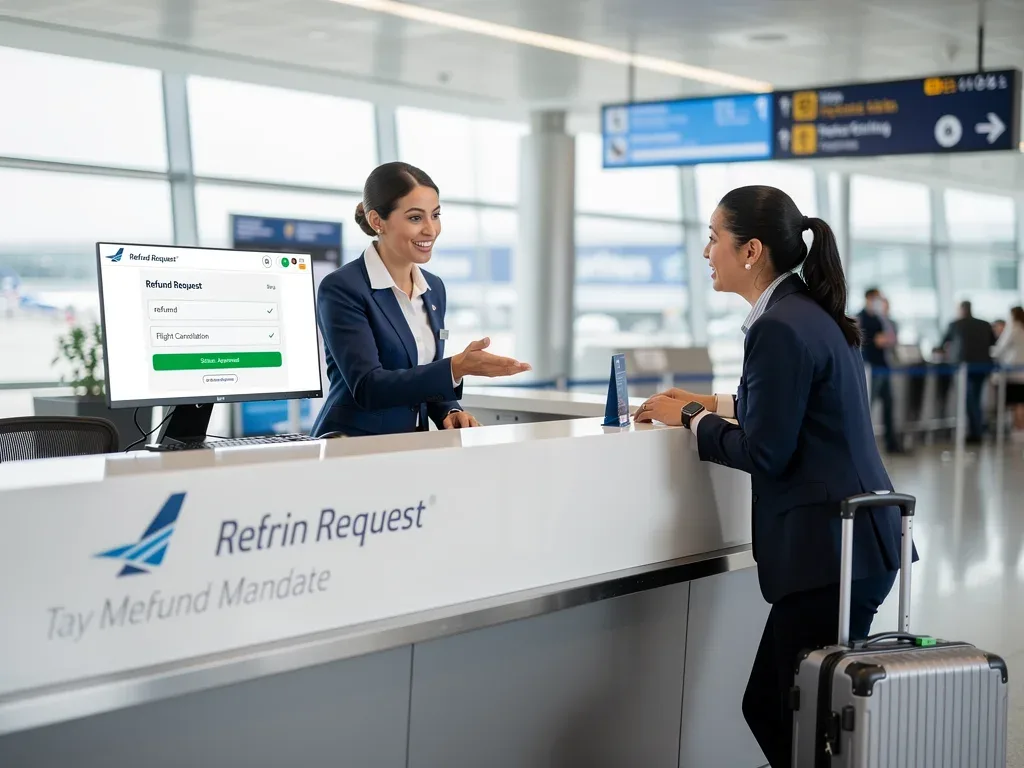
Knowing that they will automatically receive a cash refund for significant delays can alleviate some of the anxiety associated with booking flights. This peace of mind is invaluable, particularly for travelers on critical business trips or important personal journeys. The mandate signals that passenger convenience and financial protection are being taken seriously by regulators.
As airlines adapt and demonstrate compliance, the cumulative effect of more reliable service and straightforward refunds could lead to a more positive public perception of the industry.
This renewed confidence might encourage more people to choose air travel, benefiting the airlines in the long run through increased demand and improved brand loyalty. The mandate is a crucial step towards a more equitable relationship between airlines and their customers.
Comparing with International Standards
The Automatic Cash Refunds brings U.S. consumer protections closer to, and in some aspects aligns with, international standards. Many other regions, particularly the European Union, have long-standing regulations that provide robust compensation and refund rights for air passengers. This move by the DOT reflects a global trend towards stronger consumer advocacy in air travel.
For instance, the European Union's EC 261 regulation mandates compensation for significant delays (typically over three hours) and cancellations, in addition to refunds.
While the U.S. mandate focuses specifically on automatic cash refunds, it shares the principle of proactive compensation for disruptions. This convergence suggests a growing international consensus on the importance of passenger rights, regardless of where the journey originates or terminates.
However, there are still differences in scope and specific thresholds. The U.S. mandate's emphasis on cash refunds for specific delay durations is a strong protection, but it does not currently include additional compensation for inconvenience, which is a feature of some international regulations.
Nevertheless, this new rule represents a substantial step forward for American travelers, offering them protections comparable to those enjoyed by passengers in other developed nations.
EU's EC 261 Regulation
The European Union's EC 261 regulation is often cited as a benchmark for airline passenger rights. It provides comprehensive protections for travelers experiencing delays, cancellations, and denied boarding. Under EC 261, passengers are entitled to financial compensation (in addition to refunds) for delays of three hours or more, depending on the flight distance and the reason for the delay.
Unlike the U.S. mandate, EC 261 specifies fixed compensation amounts ranging from €250 to €600, depending on the flight distance, when delays are attributable to the airline.
It also requires airlines to provide care and assistance, such as meals, refreshments, and accommodation, during extended delays. These provisions go beyond the U.S. DOT's current refund-focused mandate.
While the U.S. is catching up on the refund aspect, the EU's regulation offers a broader spectrum of protections, including the right to compensation for inconvenience.
The new DOT rule does not currently introduce such compensation, focusing instead on the timely return of funds for services not rendered. This highlights areas where U.S. regulations could potentially expand in the future to further align with global best practices.
Key Differences and Similarities
A primary similarity between the Automatic Cash Refunds and international standards is the recognition of a passenger's right to a refund for significant flight disruptions. Both U.S. and many international regulations acknowledge that when an airline fails to deliver the contracted service, passengers should not bear the financial loss.
However, a key difference lies in the scope of compensation. While the U.S. mandate focuses on the automatic cash refund of the ticket price, many international regulations, like EC 261, also include provisions for additional monetary compensation for the inconvenience caused by delays and cancellations. This extra compensation is a significant distinction that U.S. law currently lacks.
Another notable difference is the definition of "significant delay." While the U.S. sets specific hours (3 for domestic, 6 for international), some international rules might have slightly different thresholds or take into account other factors.
Despite these variations, the overall trend is towards greater consumer protection, ensuring that travelers are better informed and financially safeguarded against unforeseen travel disruptions.
Preparing for Your Next Flight
With the Automatic Cash Refunds now in effect, travelers have a clearer understanding of their rights. However, being prepared for potential flight disruptions remains essential. Passengers should familiarize themselves with the specifics of the mandate, ensuring they know when and how they are entitled to a cash refund. This proactive approach can significantly reduce stress and confusion during travel.
Before booking, it is advisable to review an airline's specific policies regarding delays and cancellations, even though the DOT mandate sets a baseline.
Some airlines may offer additional protections or services beyond the minimum requirements. Understanding these details can help in making informed choices and selecting carriers that prioritize customer service and operational reliability.
Furthermore, keeping accurate records of your travel plans, including booking confirmations, flight numbers, and any communication with the airline regarding delays or cancellations, is crucial. This documentation will be invaluable if you need to assert your right to a refund or file a complaint with the DOT. Being well-informed and organized is your best defense against travel disruptions.
What to Do if Your Flight is Delayed
If your flight experiences a significant delay of three hours or more for domestic travel, or six hours or more for international travel, under the new mandate, you are entitled to an automatic cash refund. The first step is to confirm the duration of the delay with the airline. Airlines are required to provide timely updates on flight status and the reason for any disruptions.
While the refund should be automatic, it's wise to keep records of the delay, including screenshots of departure boards or airline notifications. If you decide not to take an alternative flight offered by the airline and choose a refund instead, ensure this choice is clearly communicated and documented. Remember that the refund must be in cash, not vouchers.
If the airline does not initiate the refund process within seven business days for credit card purchases or 20 calendar days for other payment methods, you should follow up with the airline directly.
If the issue remains unresolved, file a complaint with the Department of Transportation. The DOT's enforcement mechanisms are in place to ensure compliance with the new rules, protecting your right to a timely refund.
Key Information to Keep on Hand
To ensure a smooth process under the Automatic Cash Refunds, travelers should always have key information readily accessible. This includes your flight reservation number, ticket number, and the original purchase receipt. These details are essential for any communication with the airline or for filing a complaint with the DOT.
It is also beneficial to have the contact information for your airline's customer service readily available, including their phone number, email address, and social media handles. In situations of significant delays, these channels can be crucial for obtaining real-time updates and discussing your options. Being able to quickly reach a representative can make a substantial difference in resolving issues efficiently.
Finally, understanding the specific thresholds for significant delays (3 hours domestic, 6 hours international) and the timeframe for receiving automatic cash refunds (7 business days for credit cards, 20 calendar days for others) is paramount.
Being knowledgeable about these details empowers you to advocate for your rights effectively and ensures you receive the compensation you are entitled to under the new DOT mandate.
Future Outlook and Challenges
The implementation of the Automatic Cash Refunds marks a significant turning point, but its long-term success will depend on consistent enforcement and industry adaptation.
While the mandate provides robust protections, challenges may arise as airlines integrate these new requirements into their complex operational frameworks. Continuous monitoring by the DOT will be essential to address any loopholes or resistance.
One potential area for future development could be the expansion of the mandate to include compensation for inconvenience, similar to European regulations. As U.S. consumer advocacy grows, there may be increasing pressure to provide more comprehensive relief beyond just the ticket price.
This evolution would further align U.S. air travel rights with global best practices, enhancing the overall passenger experience.
Another challenge involves educating the flying public about their newly strengthened rights. While the mandate is now law, widespread awareness is crucial for its effectiveness.
Both the DOT and consumer advocacy groups will play a vital role in disseminating this information, ensuring that every traveler knows when and how they are entitled to an automatic cash refund, fostering a more informed and empowered consumer base.
Potential Industry Resistance
While the Automatic Cash Refunds is law, the airline industry may still present challenges to its full implementation. Airlines operate on tight margins, and the financial implications of automatic cash refunds for widespread delays could be substantial. This might lead to initial resistance or attempts to find interpretations that minimize their financial exposure.
Some airlines might lobby for adjustments to the mandate, citing operational complexities or unforeseen circumstances. However, the DOT's firm stance on consumer protection suggests that such efforts are unlikely to succeed in weakening the core provisions. The focus will remain on ensuring that passengers receive their rightful refunds without undue burden or delay, upholding the spirit of the new rule.
The industry's adaptation will involve significant investment in technology and procedural changes. Airlines that embrace these changes proactively and transparently are likely to build greater customer loyalty and avoid costly enforcement actions. Those that resist may face public scrutiny and penalties, demonstrating the DOT's commitment to ensuring compliance across the board.
Consumer Awareness and Education
For the Automatic Cash Refunds to be truly effective, widespread consumer awareness and education are paramount. Many travelers may not yet be fully aware of their enhanced rights, which could hinder their ability to assert claims or hold airlines accountable. The DOT, alongside consumer advocacy organizations, has a crucial role in disseminating this information.
Educational campaigns through various media channels, clear communication on airline websites, and readily accessible information at airports are all necessary to inform the public.
Travelers need to know the specific thresholds for delays that trigger a refund and the timeline for receiving their money back. Empowering consumers with this knowledge ensures they can confidently navigate disruptions.
Furthermore, understanding how to file a complaint with the DOT is vital for instances where airlines fail to comply. An informed consumer base is the strongest enforcement mechanism, as it holds airlines accountable and provides the DOT with the necessary data to identify and address systemic issues.
Continued efforts in consumer education will solidify the impact of this groundbreaking mandate, ensuring its benefits reach every air traveler.
Key Point | Brief Description |
|---|---|
Automatic Refunds | Airlines must automatically issue cash refunds for qualifying delays. |
Delay Thresholds | 3 hours for domestic flights, 6 hours for international flights. |
Refund Timelines | 7 business days for credit cards, 20 calendar days for other payments. |
Enhanced Protection | Strengthens consumer rights, reduces burden on passengers. |
Frequently Asked Questions About DOT Airline Refunds
What is the core requirement of the new DOT mandate?▼
The mandate requires airlines to provide automatic cash refunds to passengers when their flights are significantly delayed or canceled. This means airlines must proactively process refunds without requiring passengers to formally request them, simplifying the compensation process for travelers.
How long does a flight delay have to be for an automatic cash refund?▼
For domestic flights, a delay of three hours or more from the originally scheduled departure time triggers the automatic cash refund. For international flights, the threshold is set at six hours or more. These specific durations provide clear guidelines for both passengers and airlines.
What is the timeframe for receiving an automatic cash refund?▼
Airlines are required to issue cash refunds within seven business days for purchases made with a credit card. For other payment methods, the refund must be processed within 20 calendar days. These timelines ensure prompt reimbursement for affected travelers.
Does the mandate apply if I accept a travel voucher instead?▼
No, the automatic cash refund is for passengers who choose not to accept alternative transportation or a travel credit. If you opt for a voucher, you are accepting the airline's alternative offer. The mandate ensures cash is an available and automatic option if you prefer it.
What if an airline fails to provide an automatic refund?▼
If an airline fails to process your automatic cash refund within the mandated timeframe, you should first contact the airline directly. If the issue remains unresolved, you can file a complaint with the Department of Transportation, which will investigate and enforce compliance.
What happens now
The Automatic Cash Refunds fundamentally shifts the balance of power towards consumers. Travelers should stay informed about these new rights, as they offer significant protection against flight disruptions.
It is imperative to monitor airline compliance and report any violations to the DOT, ensuring the mandate achieves its full intended impact on air travel in the United States. This marks a new era of accountability for the aviation industry.